Published by Jeremy. Last Updated on August 19, 2026.
Disclaimers: We use demographic data, email opt-ins, display advertising, and affiliate links to operate this site. Please review our Terms and Conditions for more information. This website is intended for those of legal drinking age in your jurisdiction.
Alsace is one of our personal favorite wine regions in France and has a history as unique as its grapes are flavorful.
It may not be the first choice for visitors exploring French wine regions, I will admit (as it often feels secondary to nearby Champagne and Burgundy), but for those who like fine Riesling, Pinot Gris, Gewurztraminer, quaint towns, and world-class Christmas Markets in the holiday season, it is really hard to skip over a trip to Alsace.
But, as with planning trips to any wine region, figuring out the finer details of an Alsace wine trip has many things to keep in mind. So we have you covered here with key details to know when visiting Alsace for wine tasting!
Alsace Location, Regions, and Styles
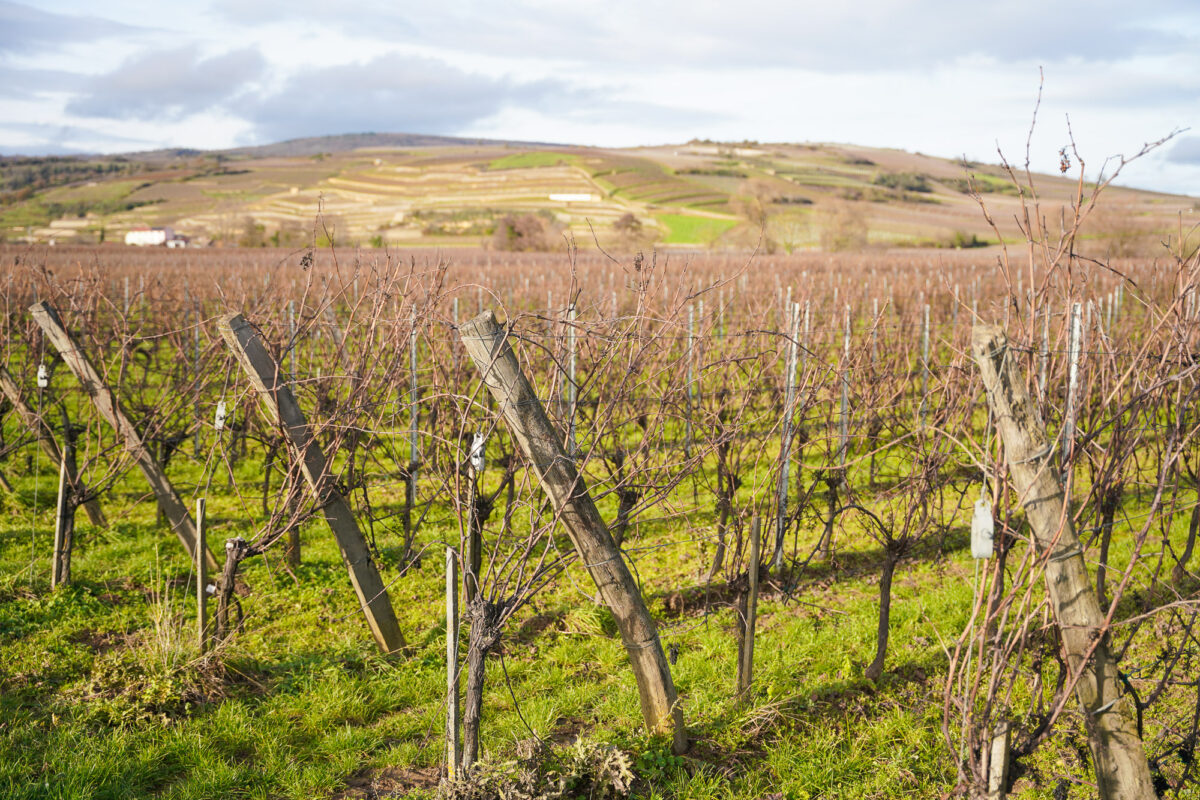
Alsace is located in the northeast corner of France, alongside the border of Germany. It is located about two hours east of Paris by TGV (five hours by car) and is one of the furthest north wine regions in France. It primarily runs north-to-south in a fairly narrow strip, starting just west of Strasbourg and extending about 20 miles south of the west side of Colmar.
The region's relationship with Germany is perhaps one of the most important elements to note, as it has been swapped between nations many times over the centuries. France had governance over Alsace from the mid-1600s to the late 1800s. Germany took over until the end of WWI. France regained control until WWII, when Germany occupied it again until the end of the war in 1945, when the region was returned to France, where it remains to this day.
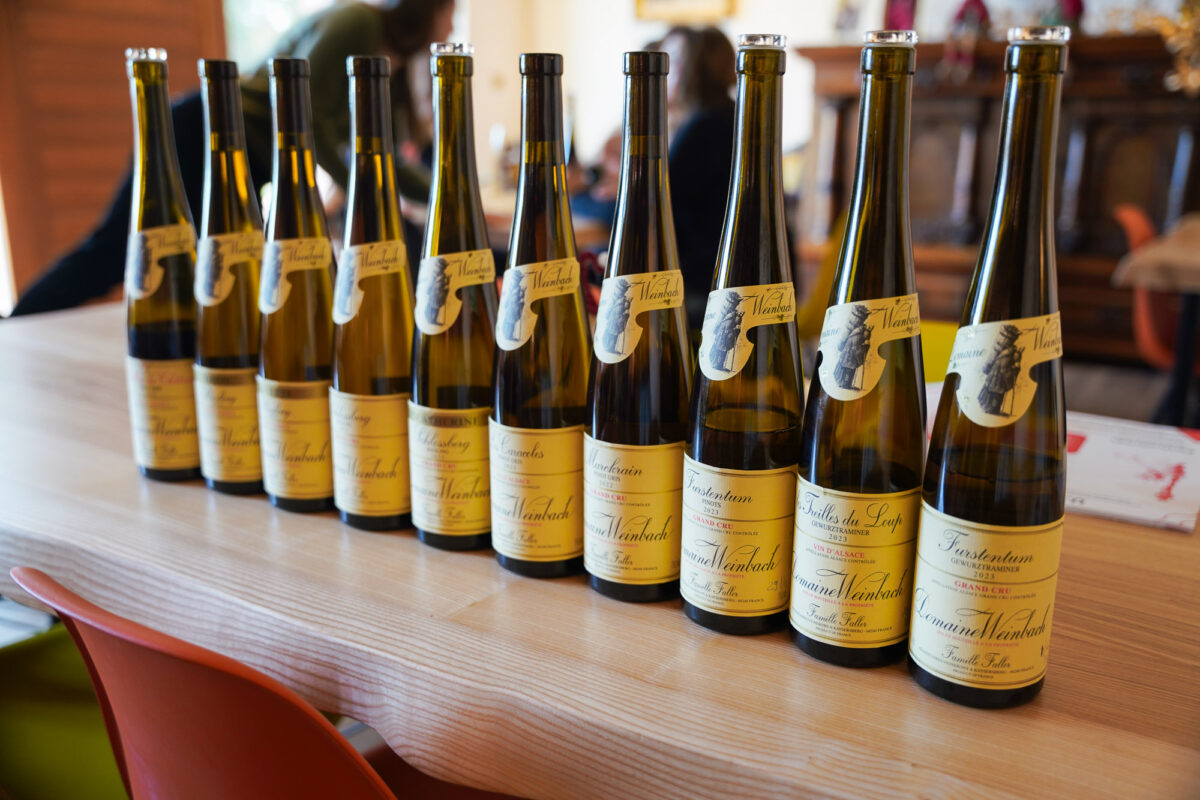
This has led to many popular German grapes being planted here that you may not find elsewhere in France, with Riesling, Gewurztraminer, Pinot Gris, and Muscat among the “noble grapes” of the region. (That said, you are likely to find many more grapes being produced- a favorite of ours outside of the noble grape list was Sylvaner!)
The geography of Alsace is also fairly unique in France, as the Vosges Mountains to the west provide a rain shadow, producing more sunny days and slightly warmer weather than nearby regions- allowing for riper grapes and more intense flavors- particularly notable in the noble grapes mentioned above. But beyond this, Alsace produces wines in many styles including dry wines, Vendanges Tardives (late harvest, which are often sweet), Selection de Grains Nobles (noble rot- even sweeter), Cremants (sparkling), and more.
As such, visitors to Alsace should not only be on the lookout for the noble grapes, but also the wide varieties of styles you may find the wines in. Yes, the dry and off-dry grand crus of the nobles are excellent, but you really should plan to do a deep dive and try all styles and grapes to get a greater appreciation for all things Alsatian wine!
- Pro tip: If you dislike Italian Pinot Grigio, do not fret- Alsatian Pinot Gris has more intensity, alcohol, and complexity of flavors on average. Many visitors are shocked and find it is a new favorite grape after visiting Alsace. We are included in this assertion. Do not sleep on Pinot Gris!
When to Visit Alsace
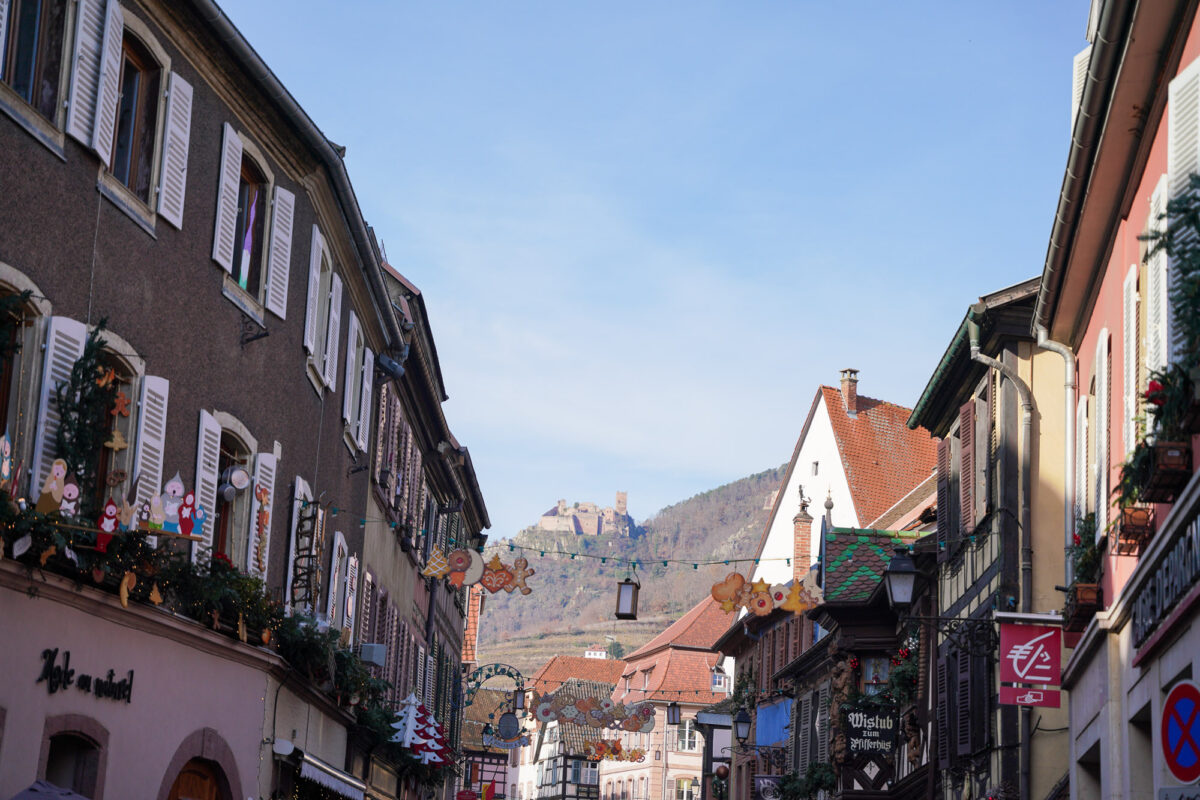
Located in northern France, Alsace is a four-season destination with hot summers and fairly cold winters by wine-region standards. As a result, there isn't a bad time to visit Alsace, just special considerations to keep in mind in each season.
Many visitors note that the optimal time to visit Alsace purely for wine tasting is the fall, if only because the vineyards are stunning and there are wine festivals. Summer is peak travel time in most of Europe, so places can be quite busy, and winter may be a bit quieter overall.
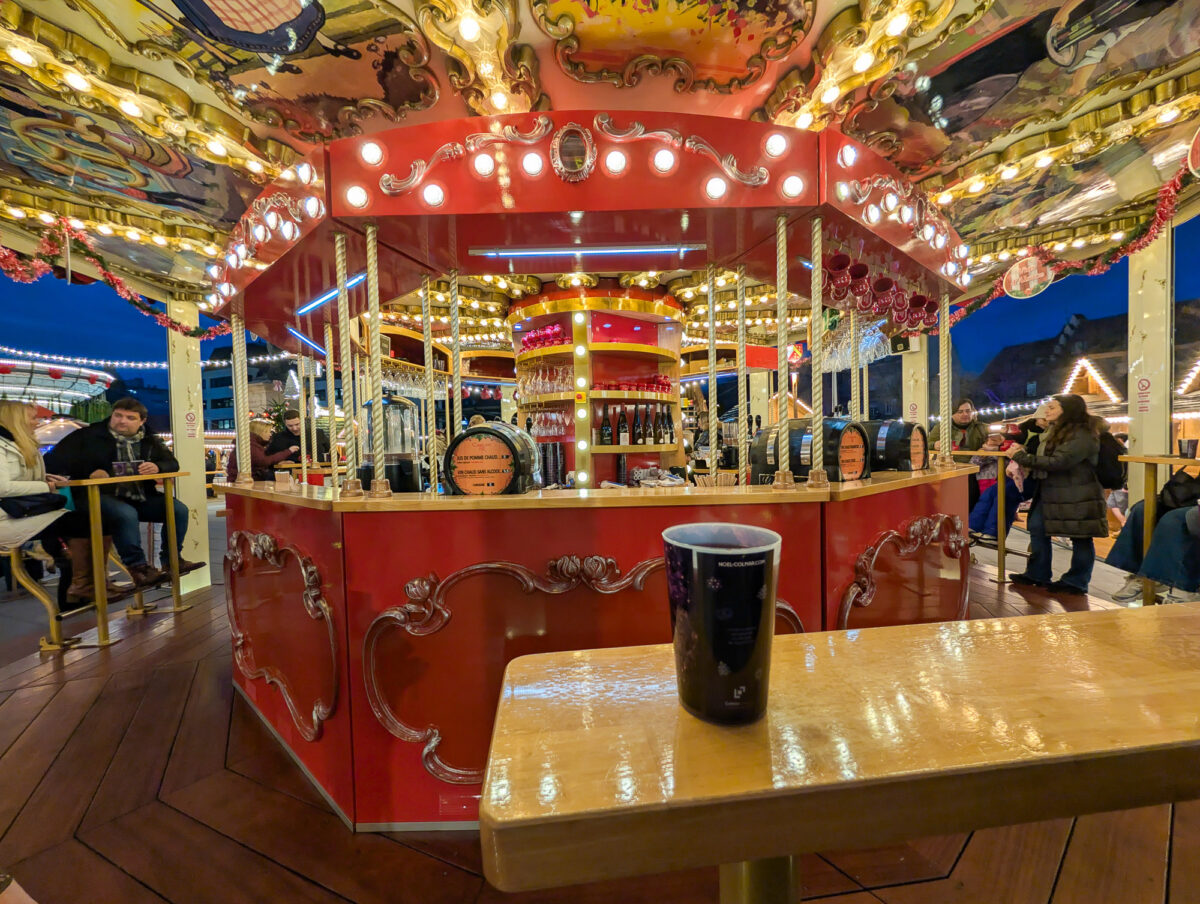
A particular exception worth highlighting is that Alsace is often considered the Christmas Market capital of Europe, and Strasbourg, Colmar, and many nearby towns can be exceptionally busy when the markets are open. Some smaller towns may have limited runs only closer to Christmas; others may only operate on weekends, but the biggest towns (Strasbourg and Colmar in particular) will be chaotically busy from late November until the end of December without fail- especially so on weekends.
We visited in late November during the Christmas market season on purpose to enjoy both and thought it was a great idea. But there is no getting around it- Alsace was chaos. So if you plan to visit during the holiday season, you'd better be interested in weaving in Christmas market time into your itinerary to justify the crowds.
We have also read that some wineries do close for winter breaks as well, so apart from the crowds during the holiday season, you may find that some wineries are unavailable to visit throughout the winter and instead operate more seasonally from spring to late fall. We did not find it particularly challenging to visit wineries in late November, but you would do well to check whether any must-visit spots have closures around this time of year.
- Please note: Our rough date ranges are only guidelines. Whether wineries are open during the dates listed above may vary and should be confirmed.
Planning Where to Stay in Alsace
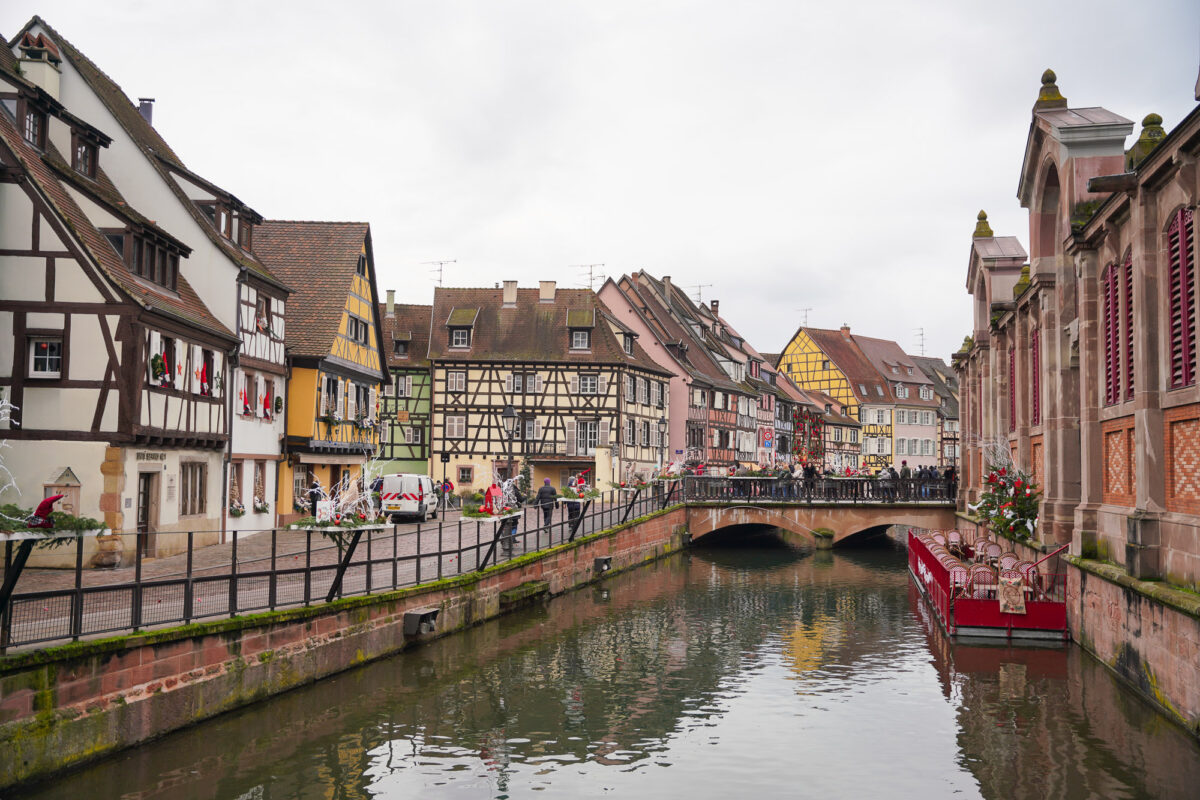
If you are planning a trip to Alsace, odds are good you may be considering three different areas for a base:
- Staying in Strasbourg – The largest town in the region on the northern end of Alsace with more restaurants and amenities, plus easier train access to nearby major cities like Paris or Munich
- Staying in Colmar – A much smaller, but still decently sized, town on the southern end of Alsace with good amenities and accessible from Strasbourg by train
- Staying in a small town in the wine region – Many of Alsace's top-tier wineries are found in charming small towns that have some amenities and beautiful views, but depending on size some things, like restaurants, can be limited
Any of these could, admittedly, be a great choice depending on the type of experience you're looking for.
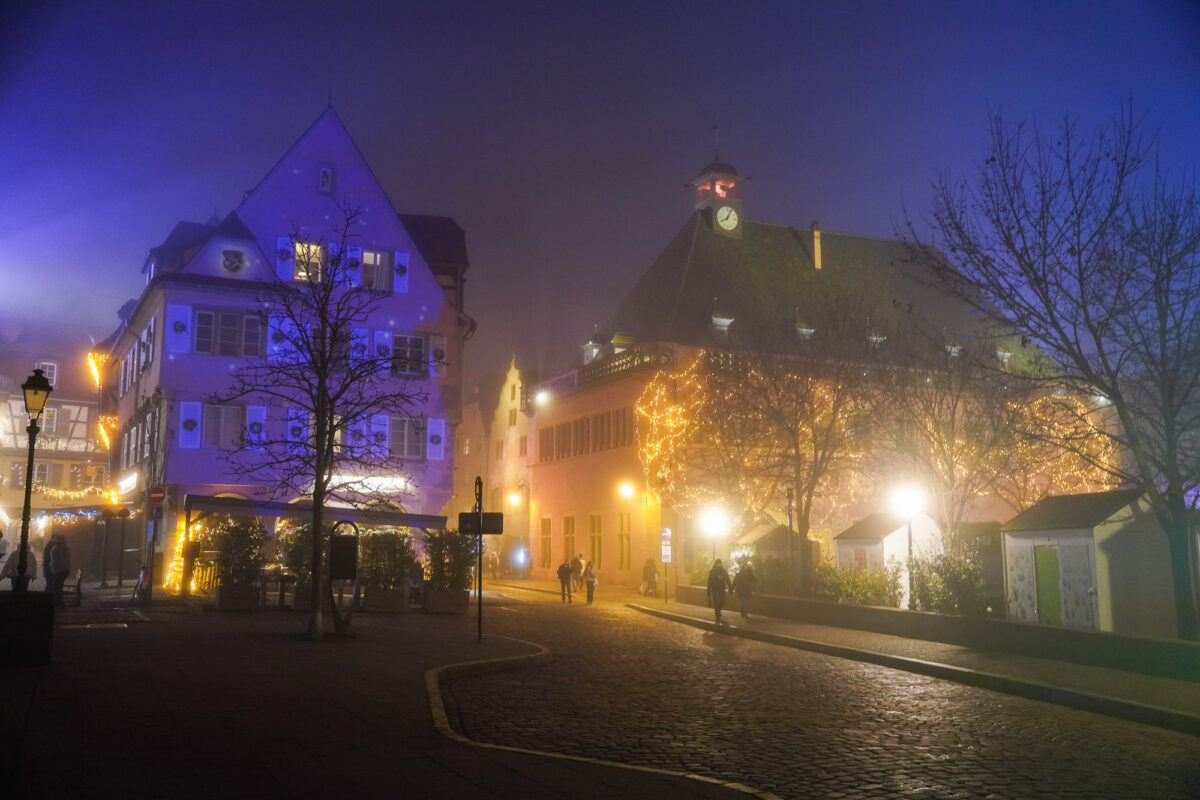
First, and perhaps most importantly, it is worth noting that the presence of wineries in major towns like Strasbourg and Colmar is limited. So if you're exploring Alsace for wine tasting, most visitors would do well to have a car to explore the region at large.
None of the wineries are that far away, as Alsace really only covers a distance of about an hour north-to-south by car, so you will almost always be close to some wineries no matter what.
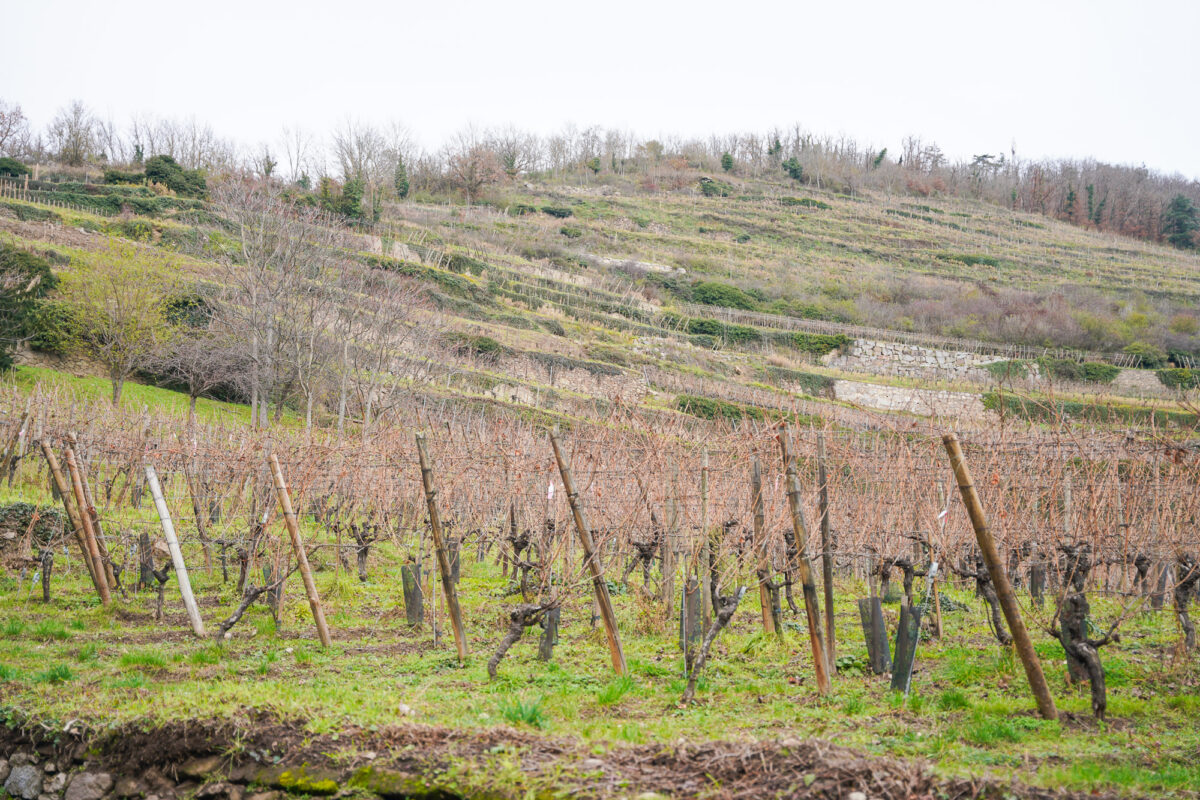
Second, it is also worth noting that many wineries do not have their Domaines or tasting rooms right next to their vineyard plots. Many of the most prestigious wineries in Alsace use several grand cru sites throughout the area, and domaines/tasting rooms are often found in, or just outside of, smaller town centers.
This isn't to say this is always the case. We did a couple of tastings at wineries with beautiful views of their vineyard plots. But more often than not, tasting rooms are in a small town where you would then go outside, look up a hill a reasonable distance away, and be pointed to a few rows of grand cru plots that went into some (but not all) of the wines you just tried, with countless more scattered throughout the region at large.
Third, we loved all of these. Strasbourg? Great. Colmar? Super charming. Towns like Ribeauville and Kaysersberg (home to Trimbach and Weinbach, respectively)? Quaint and so beautiful!
As such, we could entertain arguments for any of these. If you prefer a bigger city ambiance for more to do at the end of the day, Strasbourg has more than plenty to make you happy. If you want a bit more charm and the famous gingerbread houses that are popular in the region, while still having amenities, Colmar is wonderful (we stayed here and would do it again in a heartbeat), and its Christmas market is pretty stellar if you're there during the holiday season. If you want a quieter country experience, a small town near a prized winery isn't too bad, either.
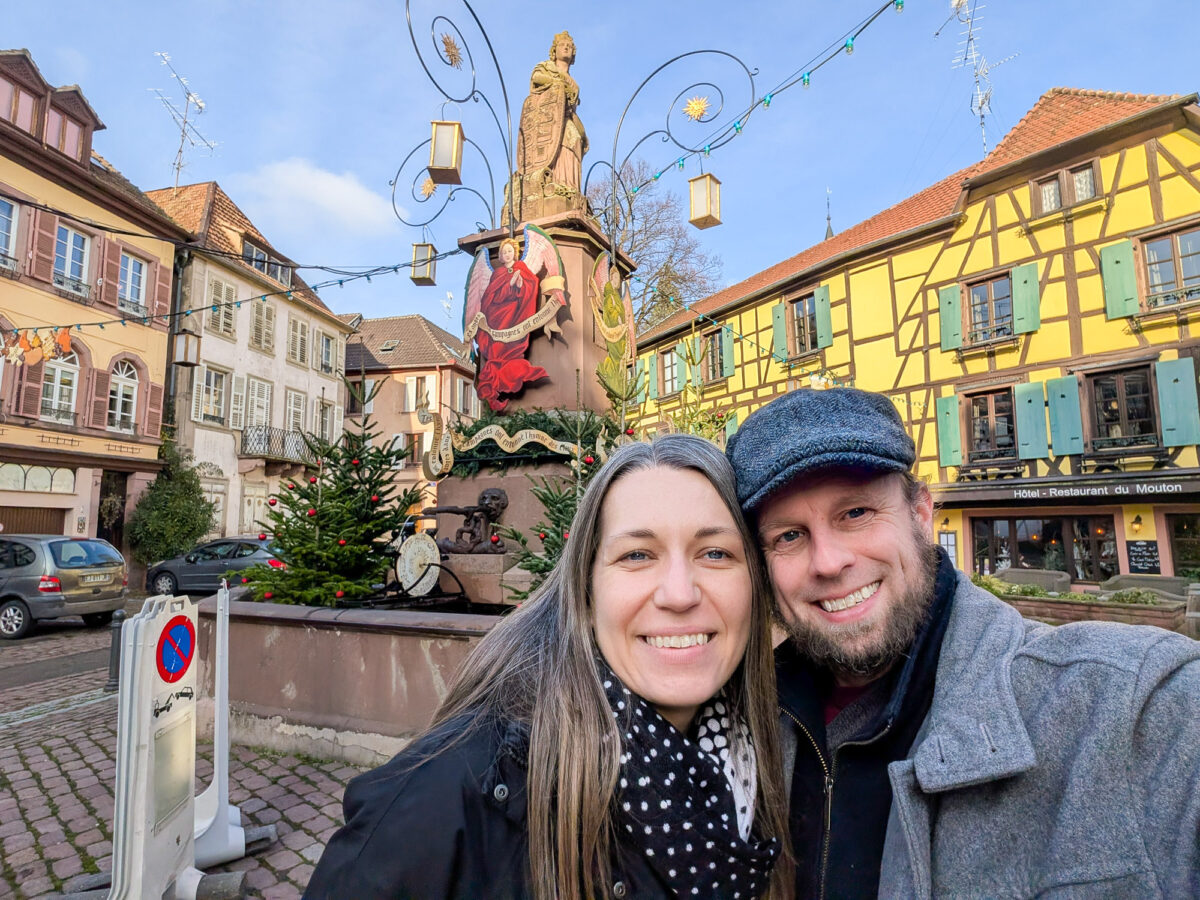
Finally, we need to briefly talk about those Christmas Markets once again, because your considerations may change around the holiday season when the crowds get absolutely insane.
Strasbourg, for example, closes down the old town center almost entirely during the Christmas Market period. There were security screenings and mandatory bag checks to enter the old town center (I would not want to pass through that with all my luggage). Traffic was so heavy that when we visited Strasbourg on a day trip to check out the markets, we left our car in Colmar and took the train to reduce the stress of finding parking. This was an excellent move.
Colmar, similarly, is so concentrated with people and traffic that it becomes quite difficult to get around, especially on weekends. We stayed in an Airbnb across the train tracks just outside of the old town center and, while a short walk to the Christmas market, also made getting in and out of town much, much easier. So being strategic to be close but just far enough away from the action during the Christmas Market season can be a logical move in either location.
And those small towns, well, some of those small towns feature premium Christmas markets as well (sometimes only on weekends or for limited duration as previously mentioned), and parking can be next to impossible to find at all. We were lucky to visit earlier in the season and were not impacted by this one as much (there was only one town we couldn't visit at all due to not finding parking within a reasonable walking distance), but it is still a possibility.
So, take all that commentary and roll it up into one final tip- if you're visiting Alsace during Christmas market season, make sure wherever you are staying has dedicated parking at a minimum!
- To book an apartment rental in Strasbourg, click here. To book an apartment in Colmar, click here.
Driving vs. Guided Alsace Wine Tours
In the previous section on where to stay, we mentioned that visitors to Alsace would do well to rent a car to explore.
This is true, and we stand by that statement.
At risk of repeating ourselves, this is primarily due to the fact that the wine region of Alsace proper is just a few miles west of each of the major towns, and most wineries do not have facilities in Strasbourg or Colmar (compared to, say, Champagne, where you can find many tasting rooms within walking distance of Epernay and Reims town centers).
Throw in that driving in Alsace is incredibly easy, with not too many special concerns to keep in mind, and we would advocate that most everyone pick up a car to explore except for one case- you're only passively interested in wine.
For those who are visiting Alsace for other reasons and want to throw on some tastings, but do not necessarily care what wineries you visit, you can find a number of guided tours from Strasbourg and Colmar that can hit one or a few wineries, such as:
- Half Day Tour from Strasbourg
- Alsace Half Day and Full Day Wine Tours from Colmar
Wineries in Alsace to Consider
Given Alsace's large number of grapes (including the four noble grapes) and many styles from dry to sweet, late harvest to botrytized, and sparkling, you really have your work cut out for you if you want to try everything.
Some wineries focus on just a handful of grapes and styles (Albert Selz has excellent Sylvaner, Marcel Deiss specializes in field blends, and Domaine Mure has a bit of everything with some killer Cremant, for example), whereas others have a larger selection, and we fully believe those who want to get the best appreciation for Alsatian wine should make sure to try a cross-section of each.
The wineries featured below are ones we have personally researched and would consider when visiting Alsace. These were identified through a robust analysis of 3rd-party reviews to identify high-quality producers (as well as some that we've personally tried over the years and enjoyed). Other factors, such as price and range of styles, were not included. That said, we did not confirm that every winery listed below offers tours/tastings- these are just wineries that made our shortlist for further investigation. (Worst case, be on the lookout for bottles!)
Another caveat here is that this is a condensed list. Alsace has many, many wineries. Even in our research, our starting point for quality wineries was so high that our starting point for research was three times the size. We have hand-picked select wineries below to make our starting list a bit more manageable for this article. Suffice it to say, there are way more than just the below and this is just a starting point.
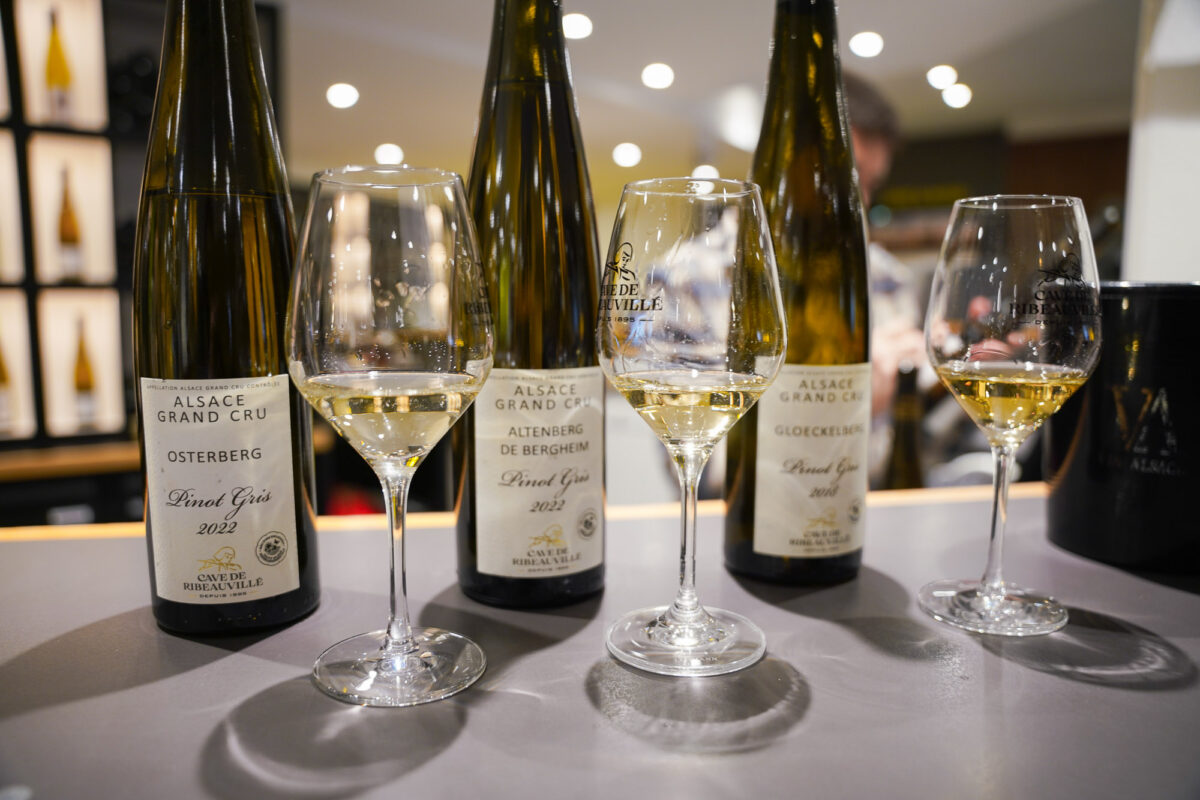
Likewise, it is worth noting that most of the wineries in Alsace we visited required advance reservations; however, some could accommodate walk-ins when room allowed. Cave de Ribeauville, for example, is a co-op that did not require reservations, which made for a great add-on stop while visiting nearby Domaine Trimbach just a couple blocks away.
Wineries we have found through our research include:
- Domaine Trimbach
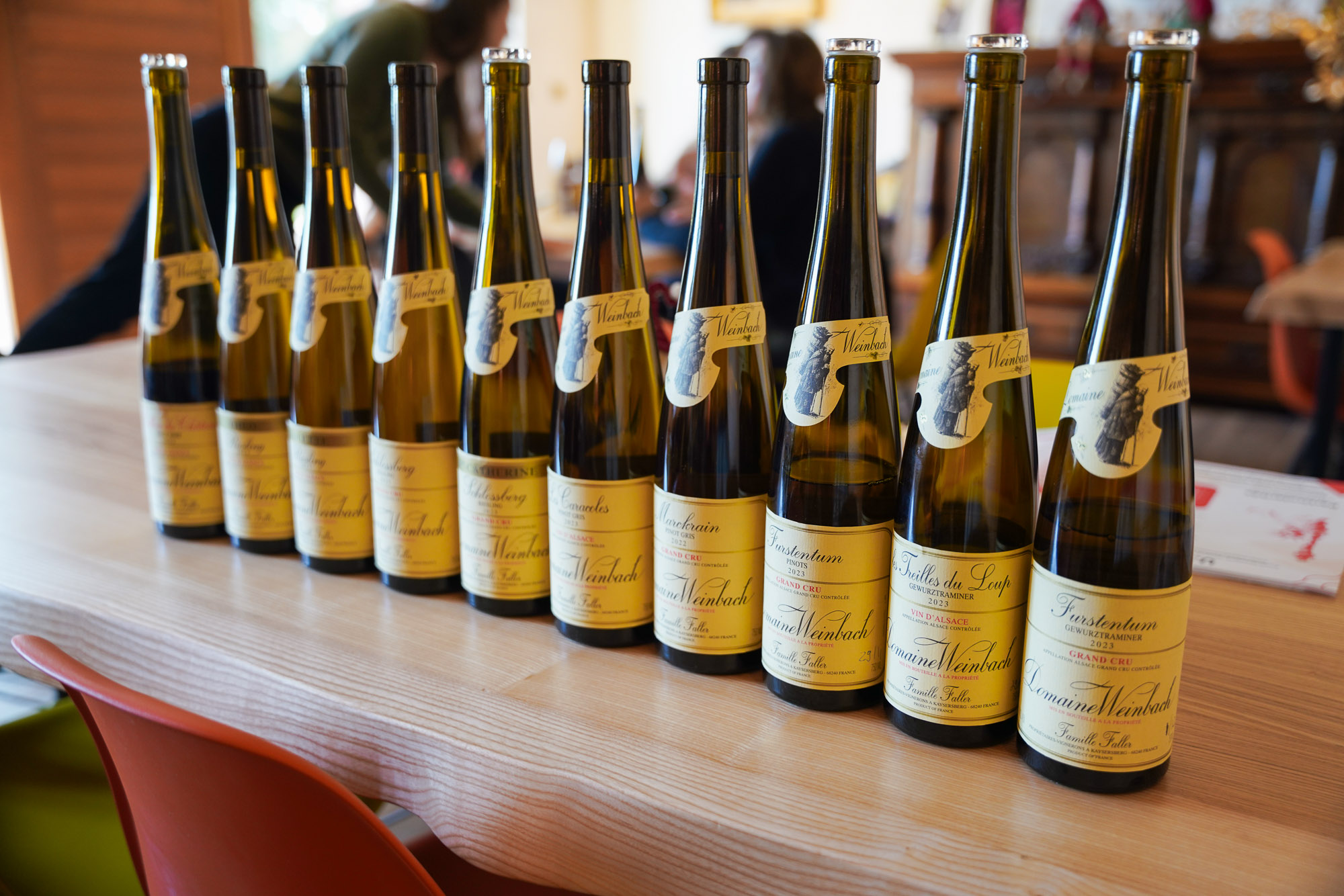
- Domaine Weinbach
- Marcel Deiss
- Domaine Albert Seltz
- Cave de Ribeauville
- Domaine Mure
- Domaine Leon Boesch
- Domaine Zind Humbrecht
- Domaine Marc Kreydenweiss
- Domaine Albert Mann
- Domaine Boeckel
- Domaine Christophe Mittnacht
- Domaine Lucien Albrecht
- Hugel et Fils
- Cave de Turckheim
- Domaine Albert Boxler
- Dirler-Cade
- Frey-Sohler
While the above wineries are a selection we reviewed for places we'd consider visiting when exploring the region, we should note that we traveled in Alsace in 2025 and hit a small selection of wineries during our brief visit. Our reviews of these Alsace wineries can be found here for additional commentary.
If you have visited a great winery in Alsace and want to let us know, please contact us! Please note that, at this time, we are only listing wineries that offer public tours and meet our quality guidelines.
Buying and Shipping Wine in France
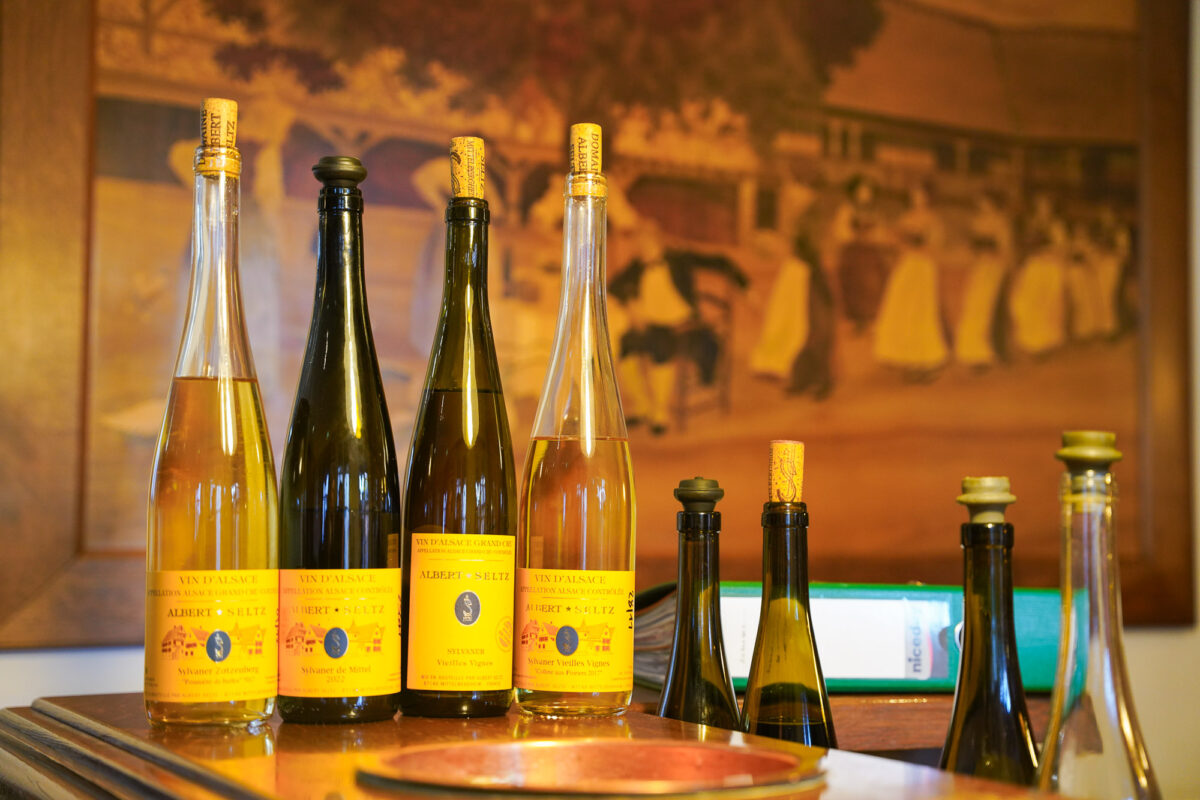
Much like most of Europe, buying and shipping wine in Alsace becomes a question of cost more than anything.
Many wineries are equipped to ship wines locally, such as to many countries in the EU, for a nominal charge. But the further you get away, like us in the USA, the prices become cost-prohibitive in a hurry.
Likewise, as Alsace is a fairly popular wine region, you may find that many bottles you like may be available via distributors and bottle shops where you live for only a nominal increase in price. Premium grand cru bottles and full line-ups from smaller producers were notable exceptions we saw during our visits, so we were strategic in only buying bottles we knew we'd have a hard time finding to take home with us (and, even there, some markups can be serious- we've seen some grand cru Trimbach bottles floating around at significantly bloated price points).
So, we fall back to our tried and true methods for taking wine home if you do not go the shipping route. These are:
- Wine Skins – Bubble-wrapped and sealable bottle skins that you can put into your suitcase for extra protection.
- Read our full Wine Skins review and packing tips here.
- Wine Suitcases – Dedicated suitcases designed for wine bottles with 6 to 12-bottle capacity typically.
- Wine Shipping Boxes – If you buy a sufficient number of bottles from a friendly winery, you may be able to ask for a shipping box to pack wines (generally up to 12 bottles per) and check on an airplane as you would a suitcase.
Inherently, these all come with pros and cons you have to consider. Wine Skins go into your existing checked bag, which is good for cutting down fees, but you need to be aware of total bag weight (bottles of wine tend to weigh about 2.6 lbs on average). Wine suitcases are rather expensive upfront costs for limited capacity (plus possibly checked bag fees both ways). Wine shipping cases are often free if you can find a friendly winery (we've always been able to source them in our travels), but may require a checked bag fee on the return trip, too.
As such, while there are several options for getting wine home from Alsace, none are perfect- so weigh the options and risks for your own liking. Personally, we use a mix of Wine Skins and shipping boxes and have had great experiences all around.
Finally, we should note that there are several great wine stores in Strasbourg and Colmar where you could do additional shopping; however, availability for any given producer/bottle can be hit or miss at times. More often than not, you would do well to just buy the bottle directly at a winery during a tasting to be safe.
Non-Wine Activities in Alsace
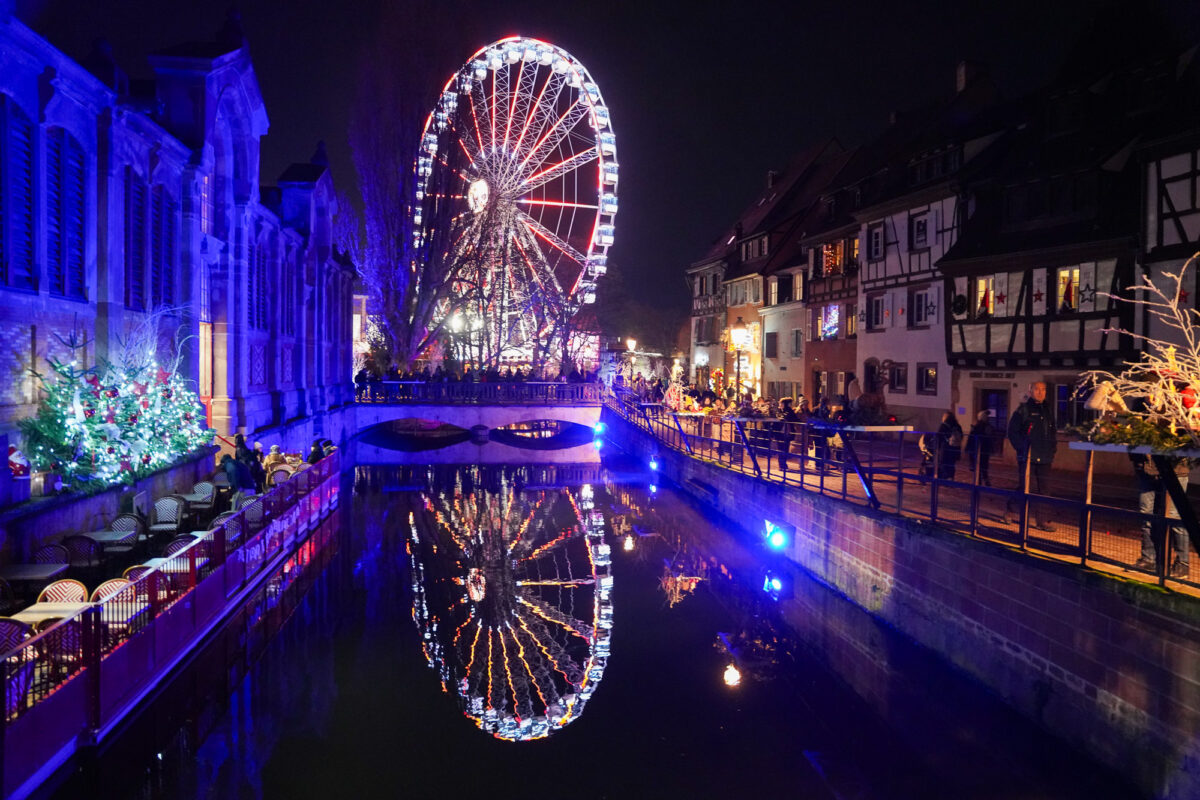
We always love to offer recommendations for non-wine activities to enjoy when traveling to a wine region, and Alsace is no different.
We, personally, spent most of our time enjoying the seasonal Christmas markets that were taking place during our visits, and there is simply wandering around all the villages for their charming architecture, too (which can be enjoyed all year).
But if you are looking for some other non-wine activities to consider when in Alsace, you may want to try:
- Alsace Gems Small Group Tour from Colmar
- France, Germany, and Switzerland from Colmar Day Tour
- Colmar and Medieval Village Tour from Strasbourg
Overall, Alsace is a pretty exceptional wine region for its unique history, less-common grapes compared to other French wine regions, seasonal attractions, and, of course, delicious bottles to enjoy.
Just be sure to be extra cautious and try all the different grapes and styles when visiting, because you may end up finding a new favorite and snagging many bottles to take home that you otherwise wouldn't have expected. We did!
Do you have any tips for taking an Alsatian wine tour? Comment below to share!
Traveling Soon? Protect Your Trip

Protect your next trip with a travel insurance policy from World Nomads!
Upgrade Your Home Wine Bar
Need to upgrade your wine bar? Grab some new wine accessories: